
The Right Way to Demonstrate Energy Savings
 As you know, an energy manager’s job is pretty frustrating. First of all, it’s nearly impossible to get adequate funding for your energy savings project. Even if you do get the money, how are you going to show that it was well spent? The answer is simple: by proving your savings. Unfortunately, it’s generally much easier said than done. What do you do if your boss doesn’t understand energy?
Video Overview of the Metrix 4 Utility Accounting System
Suppose this year’s winter is the coldest in years, and this year’s summer is the hottest. The extreme weather will lead to large increases in energy usage to heat and cool your buildings. How are you going to show energy savings when the additional heating and cooling energy usage is eating into (or maybe even overshadowing) the savings you achieved? Or if not weather, your savings may be hidden by increases in production, room occupancy, facility square footage, days in session or any number of other variables.
Imagine your utility bills showing increases in utility usage and costs, even though you know you saved energy. It happens. Don’t let it happen to you.
This is where correcting for weather (or other variables) comes in. There is a way to determine and present your energy savings AFTER taking these variables into account – and it’s called multi-variable normalization. Metrix is the only energy software that allows you to correct for weather and up to 3 other independent variables – all at the same time. What’s more, the Auto Tune feature in Metrix evaluates all your variables and selects only those which are statistically significant for your project.
Why Energy Managers Use Metrix Utility Accounting System
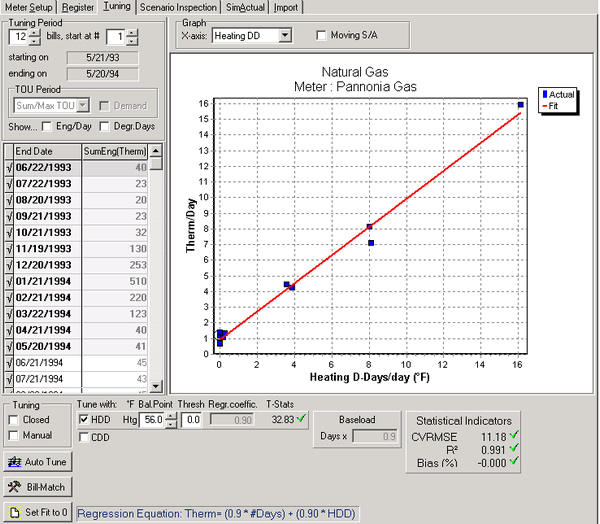
Metrix 4 Utility Accounting System normalizes your energy usage for weather and other variables (such as number of cars produced or school calendar), and presents your true energy savings. Now, variations in weather or production quantities, occupancy or schedule will no longer compromise your energy savings numbers.
Besides normalizing for variables, there is so much more that Metrix does, including:
- Benchmarking
- Load Factor Analysis
- Rate Analysis
- Determining Changes in Energy Usage Patterns
- Setting Savings Targets and Tracking Your Progress
All Reports are in Excel
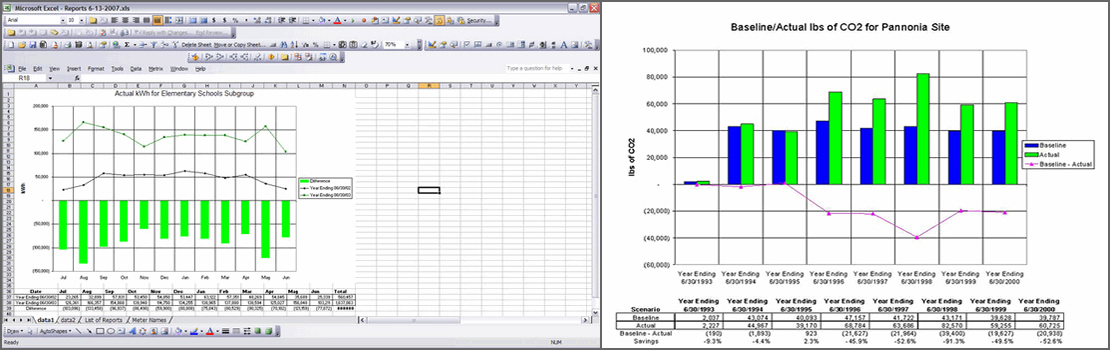
Metrix 4 Utility Accounting System’s reports are created in Excel. This means reports are easy for you to access, reformat, export, and link to any other Excel workbooks you are using. Data in Metrix can be copied and pasted into Excel, and vice-versa. Click here for a full description of Metrix 4 Utility Accounting System features.
Metrix has been used by the Energy Pros for over a Decade
Metrix has been used by energy service companies for well over a decade to calculate savings from their performance contracts. Hundreds of millions, if not billions of dollars in energy performance guarantees are riding on Metrix. Metrix is the standard in weather normalization.

Metrix is Used by Leading Organizations
Energy managers and facility managers for various types of organizations use Metrix, including:
- Accor Hotels
- Pfizer
- Baylor University
- City of Winnipeg
- And many more
Click here for a listing of clients that use Metrix 4 Utility Bill Accounting Software.
We are Energy Professionals at Abraxas Energy Consulting
We are not just utility software makers. We track utility bills for many large organizations. We perform energy audits all over the United States. We understand energy, energy management, and energy managers. We teach our clients not only Metrix skills, but energy management skills in our monthly consulting calls and at our trainings we hold around North America and Canada.